3D printing ideas range from simple household fixes to elaborate artistic creations. The technology has become accessible to hobbyists, educators, and professionals alike. Whether someone owns their first budget printer or operates a high-end machine, the possibilities keep expanding.
This guide covers practical projects across multiple categories. Readers will find inspiration for functional items, personalized gifts, gaming accessories, and educational tools. Each section offers ideas that match different skill levels and interests. The goal is simple: help makers turn filament into something useful, fun, or both.
Table of Contents
ToggleKey Takeaways
- 3D printing ideas span functional home accessories, personalized gifts, hobby projects, and educational tools for all skill levels.
- Practical prints like cable organizers, phone stands, and kitchen items solve everyday problems and deliver immediate value.
- Personalized creations such as lithophanes, custom keychains, and name-embossed gifts offer more meaning than mass-produced alternatives.
- Hobbyists and gamers benefit from 3D printing for miniatures, cosplay props, terrain pieces, and custom accessories tailored to their needs.
- STEM-focused prints like anatomical models, geometric shapes, and robotics enclosures make abstract concepts tangible for students.
- Start with proven designs from free file repositories, then build CAD skills and experiment with materials as your experience grows.
Functional Home and Office Accessories
Some of the best 3D printing ideas solve everyday problems. A custom cable organizer keeps desk clutter under control. A phone stand with the perfect viewing angle makes video calls easier. These practical prints deliver immediate value.
Popular home accessories include:
- Drawer dividers sized to fit specific spaces
- Wall-mounted hooks for keys, bags, or headphones
- Remote control holders that match existing furniture
- Laptop stands with built-in ventilation slots
- Cord management clips and cable routing channels
Office accessories offer similar opportunities. Pen holders, business card displays, and monitor risers all print well on most machines. Many designs take under two hours to complete.
Kitchen items represent another popular category. Bag clips, spice jar labels, and utensil organizers work well in food-safe materials like PETG. Replacement parts for appliances, knobs, handles, and brackets, save money and reduce waste.
Bathroom accessories round out the functional category. Toothbrush holders, soap dishes, and towel hooks customize any space. These prints require minimal supports and finish quickly.
Personalized Gifts and Custom Creations
3D printing ideas shine brightest in personalization. Mass-produced gifts lack the thoughtfulness of something made specifically for one person. A name-embossed bookmark or custom photo lithophane carries more meaning than store-bought alternatives.
Gift ideas that impress:
- Lithophanes that display photos when backlit
- Customized keychains with names or dates
- Personalized plant pots with initials or messages
- Desk nameplates for new jobs or graduations
- Cookie cutters shaped like pets, logos, or hobbies
Special occasions drive many custom projects. Wedding favors, party decorations, and holiday ornaments all benefit from 3D printing. Makers can produce dozens of identical items or create unique variations for each recipient.
Pet owners enjoy printing personalized tags, treat dispensers, and custom toys. These items cost little in materials but deliver high sentimental value.
Artistic creators push 3D printing ideas further with sculptures, jewelry, and decorative pieces. Geometric vases, abstract wall art, and articulated figures showcase what the technology can achieve. Many files are available free online, while others require basic CAD skills to customize.
Hobby and Gaming Projects
Hobbyists find endless 3D printing ideas within their interests. Tabletop gamers print miniatures, terrain pieces, and custom dice towers. Model train enthusiasts create buildings, accessories, and track components. RC vehicle fans produce replacement parts and performance upgrades.
Gaming-focused prints include:
- Miniature figures for RPG campaigns
- Modular dungeon tiles and terrain sets
- Card game deck boxes and token holders
- Board game inserts for organized storage
- Custom dice with unique symbols
Cosplay represents a major category for 3D printing ideas. Helmets, armor pieces, and prop weapons come to life through printing. Large items print in sections and assemble with glue or hardware. Post-processing with sanding, filling, and painting produces screen-accurate results.
Musicians print picks, capos, and instrument stands. Photographers create lens caps, flash diffusers, and cable releases. Gardeners produce plant markers, seed spacers, and irrigation components.
The common thread across hobbies is customization. Commercial products rarely match specific needs perfectly. 3D printing fills those gaps with items sized, shaped, and designed for individual requirements.
Educational and STEM-Focused Prints
3D printing ideas extend naturally into education. Physical models help students understand abstract concepts. A printed gear set teaches mechanical advantage better than diagrams alone. Molecular models make chemistry tangible.
STEM-focused projects:
- Anatomical models for biology classes
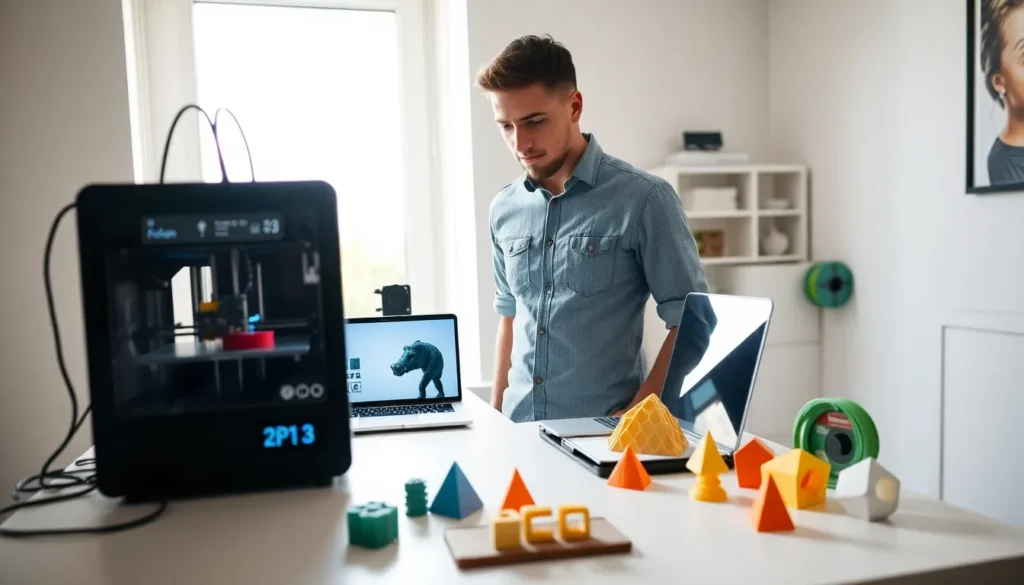
- Geometric shapes for mathematics lessons
- Simple machines demonstrating physics principles
- Topographic maps for geography studies
- Solar system models with accurate scale comparisons
Robotics and electronics projects benefit from printed enclosures, mounts, and structural components. Arduino and Raspberry Pi cases protect circuits while looking professional. Custom brackets hold sensors, motors, and displays in precise positions.
Younger learners engage with printed puzzles, building blocks, and interactive toys. Fidget toys, marble runs, and articulated animals combine play with learning. Many designs teach problem-solving through assembly.
3D printing ideas also include the printers themselves. Understanding how the machines work teaches engineering, computer science, and manufacturing concepts. Students who design and print their own objects develop spatial reasoning and iterative thinking skills.
Libraries, makerspaces, and schools increasingly offer 3D printing access. This democratization means more people can explore educational applications without purchasing equipment.
Tips for Bringing Your Ideas to Life
Good 3D printing ideas need proper execution. Start with proven designs before attempting original creations. Websites like Thingiverse, Printables, and MyMiniFactory offer thousands of free files. Downloading and printing existing models builds skills and confidence.
Practical tips for success:
- Calibrate the printer before starting new projects
- Use appropriate materials for each application
- Print test pieces before committing to large items
- Learn basic CAD software for customization
- Join online communities for troubleshooting help
Material selection matters for functional prints. PLA works for most decorative items. PETG handles heat and moisture better. TPU creates flexible objects like phone cases and gaskets. Each material requires different print settings.
Post-processing transforms good prints into great ones. Sanding removes layer lines. Primer and paint add color and protection. Acetone smoothing works on ABS prints. These finishing steps take time but improve results significantly.
3D printing ideas evolve with experience. Beginners might start with simple phone stands. Advanced users design custom mechanical parts. The learning curve rewards patience and experimentation.
Documenting projects helps track what works. Note the settings, materials, and modifications for each print. This record speeds future projects and helps troubleshoot problems.