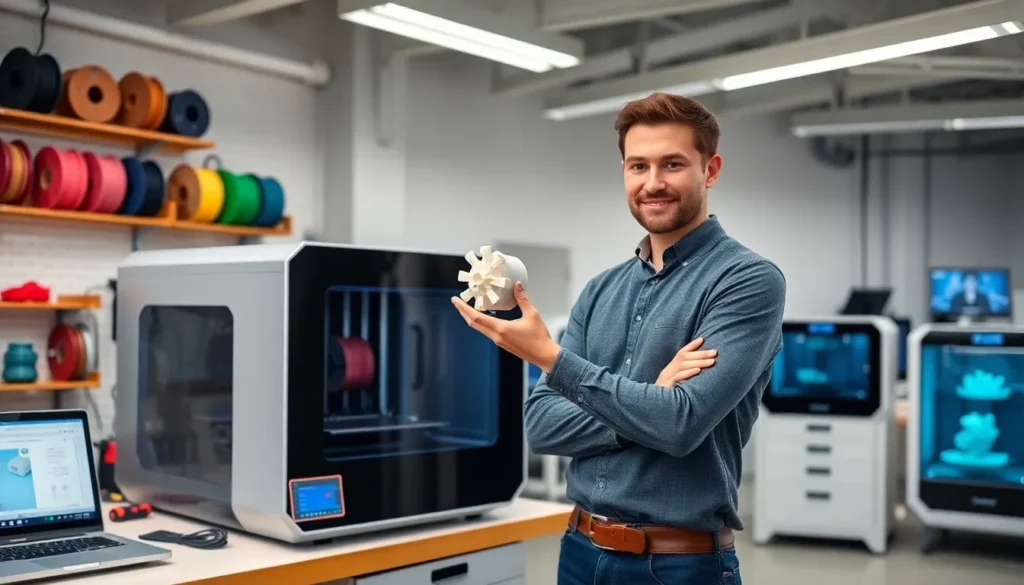

3D printing techniques have transformed how manufacturers, hobbyists, and engineers create physical objects from digital designs. Each method offers distinct advantages depending on the material, precision, and budget requirements of a project. This guide breaks down the most popular 3D printing techniques used today, from desktop-friendly FDM printers to industrial-grade SLS systems. Whether someone is prototyping a product or producing end-use parts, understanding these additive manufacturing methods helps them make smarter decisions and achieve better results.
Table of Contents
ToggleKey Takeaways
- FDM is the most accessible 3D printing technique, ideal for beginners, prototyping, and functional testing with printers starting around $200.
- SLA and resin-based printing deliver exceptional detail and smooth finishes, making them perfect for jewelry, dental products, and miniatures.
- SLS uses laser-sintered nylon powder to produce strong, functional parts with complex geometries—no support structures needed.
- Choose your 3D printing technique based on budget, precision needs, material properties, and production volume.
- Many professionals combine multiple 3D printing techniques, using FDM for prototypes, SLA for presentation models, and SLS for end-use parts.
Fused Deposition Modeling (FDM)
Fused Deposition Modeling, commonly called FDM, is the most widely used 3D printing technique for consumers and small businesses. The process works by heating a thermoplastic filament and extruding it layer by layer through a nozzle. As each layer cools, it bonds to the one below, gradually building a three-dimensional object.
FDM printers use materials like PLA, ABS, PETG, and nylon. PLA remains the most beginner-friendly option due to its low printing temperature and minimal warping. ABS offers greater durability but requires a heated bed and good ventilation. PETG strikes a balance between the two, providing strength and ease of use.
This 3D printing technique excels at producing functional prototypes, jigs, fixtures, and basic models. Entry-level FDM printers cost as little as $200, making them accessible to hobbyists and educators. Industrial FDM machines can handle larger build volumes and engineering-grade materials.
FDM does have limitations. Layer lines remain visible on finished parts, and fine details can be difficult to achieve. Post-processing like sanding or chemical smoothing improves surface quality but adds time. For applications requiring smooth finishes or high resolution, other 3D printing techniques may be more suitable.
Stereolithography (SLA) and Resin-Based Printing
Stereolithography, or SLA, uses a UV laser to cure liquid photopolymer resin into solid layers. This 3D printing technique produces parts with exceptional detail and smooth surface finishes. A variation called MSLA (Masked Stereolithography) uses an LCD screen to project UV light, curing entire layers at once.
Resin-based 3D printing techniques work well for applications demanding precision. Jewelry designers use SLA to create intricate patterns for investment casting. Dental labs produce crowns, aligners, and surgical guides with this method. Miniature painters and tabletop gaming enthusiasts prefer resin printers for their ability to capture fine textures.
The materials available for SLA printing have expanded significantly. Standard resins offer good detail but tend to be brittle. Tough and flexible resins mimic the properties of ABS or rubber. Engineering resins provide heat resistance and mechanical strength for functional parts.
SLA printing does require more post-processing than FDM. Parts must be washed in isopropyl alcohol to remove uncured resin, then cured under UV light to reach full strength. Resin handling requires gloves and proper ventilation since uncured photopolymers can irritate skin. Even though these extra steps, SLA remains a top choice for applications where surface quality and accuracy matter most.
Selective Laser Sintering (SLS)
Selective Laser Sintering represents an industrial-grade 3D printing technique that uses a high-powered laser to fuse powdered material. The laser traces the cross-section of each layer, sintering particles together while the surrounding powder provides support. After each layer, a roller spreads fresh powder, and the process repeats.
SLS typically uses nylon (polyamide) as its primary material. Nylon SLS parts offer excellent mechanical properties, including high strength, flexibility, and chemical resistance. Glass-filled and carbon-filled nylon variants add stiffness for demanding applications. Some SLS systems can also process metals and ceramics, though these machines cost significantly more.
This 3D printing technique eliminates the need for support structures. The unsintered powder naturally supports overhangs and complex geometries during the build. Designers gain freedom to create interlocking assemblies, internal channels, and lattice structures that would be impossible with other methods.
SLS produces parts with a slightly rough, matte surface texture. The finish works well for functional components but may require coating or polishing for consumer products. Desktop SLS machines have recently entered the market, bringing this 3D printing technique within reach of smaller companies and serious makers. Prices start around $10,000, a fraction of what industrial systems cost.
Choosing the Right Technique for Your Project
Selecting the best 3D printing technique depends on several factors: budget, required precision, material properties, and production volume.
FDM suits rapid prototyping, functional testing, and educational projects. Its low cost and material variety make it the default choice for many users. Someone new to 3D printing techniques should start here before exploring other options.
SLA and resin printing serve applications where detail and surface finish take priority. Jewelry, dental products, miniatures, and presentation models benefit from this method’s high resolution. The added post-processing steps are worth it for visually demanding work.
SLS fits production runs and functional end-use parts. Its ability to create complex geometries without supports opens design possibilities unavailable with other 3D printing techniques. Companies producing custom medical devices, aerospace components, and consumer goods often rely on SLS.
Other factors worth considering include:
- Turnaround time: FDM and SLA offer quick setup: SLS requires more preparation
- Material cost: FDM filament is cheapest: SLS powder and SLA resin cost more
- Post-processing: FDM needs minimal cleanup: SLA requires washing and curing: SLS parts need powder removal
- Part strength: SLS nylon parts are strongest: FDM varies by material: SLA depends on resin type
Many professionals use multiple 3D printing techniques across different project stages. They might prototype with FDM, create presentation models with SLA, and produce final parts with SLS.