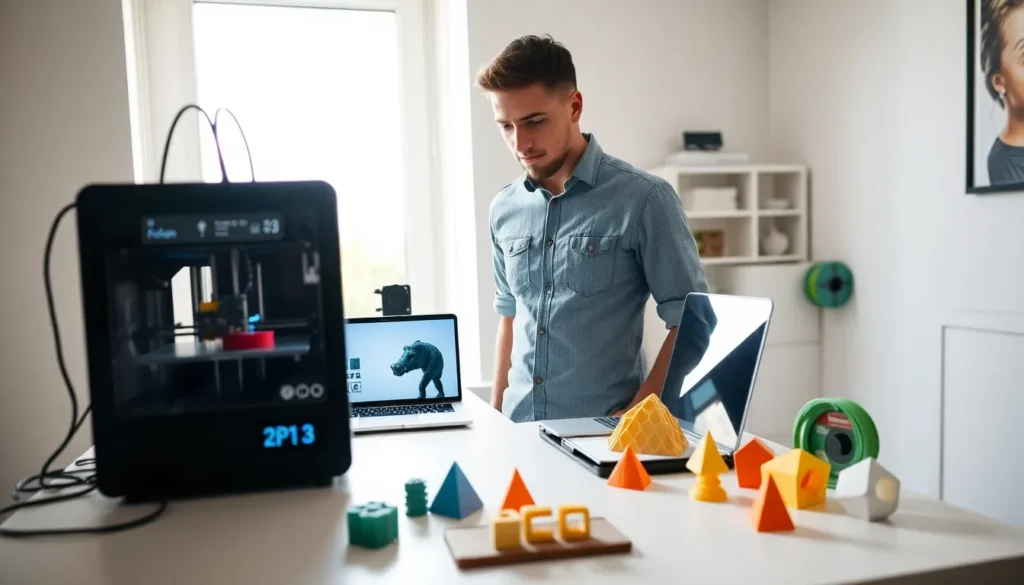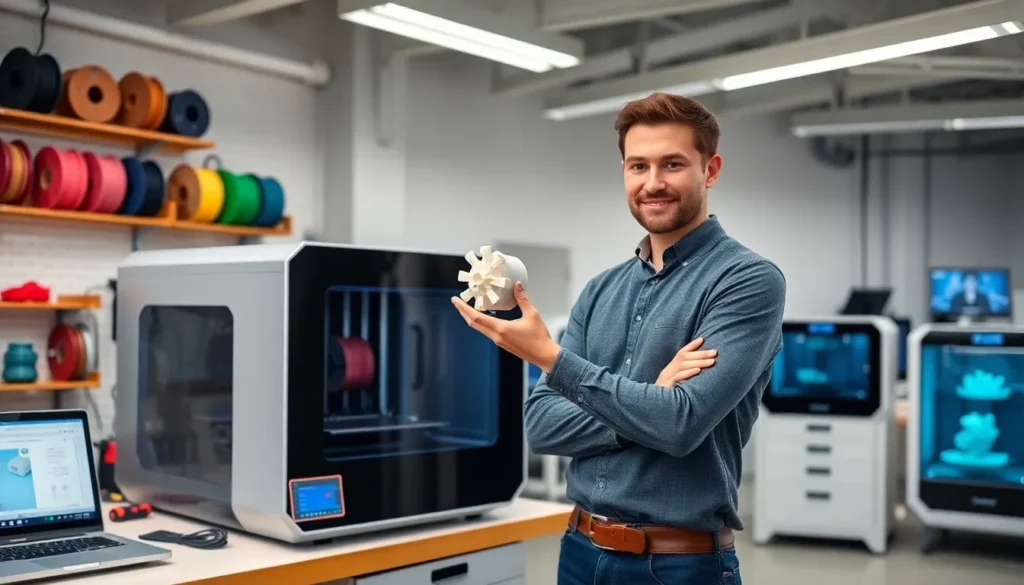

Finding the best 3D printing solution in 2025 requires understanding both the technology and your specific needs. The market has expanded significantly, with options ranging from affordable desktop units to industrial-grade machines capable of producing aerospace components.
This guide breaks down the leading 3D printing technologies, highlights top printers for home and professional use, and covers the features that matter most. Whether someone wants to print custom figurines at home or produce functional prototypes for a business, the right 3D printer exists for every budget and application.
Table of Contents
ToggleKey Takeaways
- The best 3D printing technology depends on your needs—FDM suits hobbyists, SLA delivers precision, and SLS handles industrial applications.
- Top home 3D printers in 2025 include the Bambu Lab P1S, Prusa MK4S, and Creality K1 Max, offering speeds up to 600mm/s at accessible price points.
- Professional-grade options like the Formlabs Form 4 and Markforged X7 produce production-ready parts, including carbon fiber components as strong as aluminum.
- When choosing the best 3D printing solution, prioritize build volume, material compatibility, and ease-of-use features like auto-leveling and remote monitoring.
- Strong brand support and active user communities often matter more than specifications alone for long-term printing success.
Types of 3D Printing Technologies
Several 3D printing technologies dominate the market in 2025. Each method offers distinct advantages depending on the application.
Fused Deposition Modeling (FDM)
FDM remains the most popular 3D printing technology for consumers and hobbyists. The process works by heating thermoplastic filament and depositing it layer by layer. FDM printers cost less than other options and use affordable materials like PLA and ABS. They produce durable parts suitable for prototypes, toys, and household items.
Stereolithography (SLA)
SLA uses a UV laser to cure liquid resin into solid objects. This technology produces parts with exceptional detail and smooth surface finishes. Jewelry designers, dentists, and miniature hobbyists prefer SLA for its precision. The tradeoff includes higher material costs and more post-processing requirements.
Selective Laser Sintering (SLS)
SLS fuses powdered materials using a high-powered laser. This method creates strong, functional parts without support structures. Engineers and manufacturers choose SLS for producing end-use components and complex geometries. The technology handles nylon, polyamide, and even metal powders.
Multi Jet Fusion (MJF)
HP’s Multi Jet Fusion technology has gained ground in professional settings. MJF deposits fusing agents onto powder beds, then applies heat to create parts. The process delivers faster print speeds and consistent mechanical properties across batches.
Top 3D Printers for Home Use
Home users want the best 3D printing experience without spending thousands of dollars. Several models stand out in 2025.
Bambu Lab P1S
The Bambu Lab P1S offers exceptional value for its price point. It features automatic bed leveling, an enclosed build chamber, and speeds up to 500mm/s. Users get professional-quality prints with minimal setup. The integrated camera allows remote monitoring through a smartphone app.
Prusa MK4S
Prusa Research continues to deliver reliable machines with the MK4S. This printer includes input shaping for faster prints and a quick-swap nozzle system. The open-source design means users can customize and upgrade their machines easily. Prusa’s customer support and documentation remain industry benchmarks.
Creality K1 Max
For larger prints, the Creality K1 Max provides a 300x300x300mm build volume at a competitive price. The enclosed design handles ABS and other temperature-sensitive materials. Core XY kinematics enable speeds reaching 600mm/s under optimal conditions.
Anycubic Photon Mono M7 Pro
Resin printing enthusiasts should consider the Anycubic Photon Mono M7 Pro. Its 14K resolution produces incredibly detailed miniatures and models. The tilting release system reduces peel forces and improves success rates for delicate prints.
Best 3D Printers for Professional Applications
Professional environments demand the best 3D printing equipment for production-ready parts and rapid prototyping.
Formlabs Form 4
The Form 4 represents the latest in desktop SLA technology. Its Low Force Display system prints faster while maintaining dimensional accuracy. Dental labs, engineering firms, and product designers use the Form 4 for functional prototypes and end-use parts. Formlabs offers specialized resins for specific applications including biocompatible dental materials.
Markforged X7
The Markforged X7 prints continuous carbon fiber reinforced parts. These components match the strength of aluminum at a fraction of the weight. Aerospace companies, automotive manufacturers, and industrial tool makers rely on the X7 for production tooling and fixtures.
HP Jet Fusion 5420W
For high-volume production, the HP Jet Fusion 5420W delivers consistent results. The system produces white nylon parts with excellent mechanical properties. Manufacturers use it for short-run production and functional prototypes that require specific color matching.
Stratasys F370CR
The F370CR handles composite-ready materials including carbon fiber filled nylon. It fits in office environments without special ventilation requirements. Product development teams appreciate its ease of use combined with industrial-grade output quality.
Key Features to Consider When Choosing a 3D Printer
Selecting the best 3D printing solution requires evaluating several important factors.
Build Volume
Build volume determines the maximum size of printed objects. Home users typically need 200-300mm in each dimension. Larger projects require machines with expanded build areas, which increase cost and space requirements.
Print Speed and Quality
Modern printers balance speed with quality. Fast printers reaching 500mm/s or higher sacrifice some surface finish for throughput. Applications requiring fine detail may benefit from slower, more precise machines.
Material Compatibility
Different printers support different materials. FDM machines work with various thermoplastics including PLA, PETG, ABS, and specialty filaments. SLA printers require specific resin formulations. Buyers should verify their intended materials work with their chosen printer.
Ease of Use
Auto-leveling beds, filament sensors, and intuitive software reduce frustration for beginners. Enclosed chambers protect prints from drafts and maintain consistent temperatures. Remote monitoring capabilities let users check progress without being physically present.
Support and Community
Established brands offer better documentation, replacement parts, and customer service. Active user communities provide troubleshooting help and share optimized print settings. This support ecosystem matters more than raw specifications for many users.