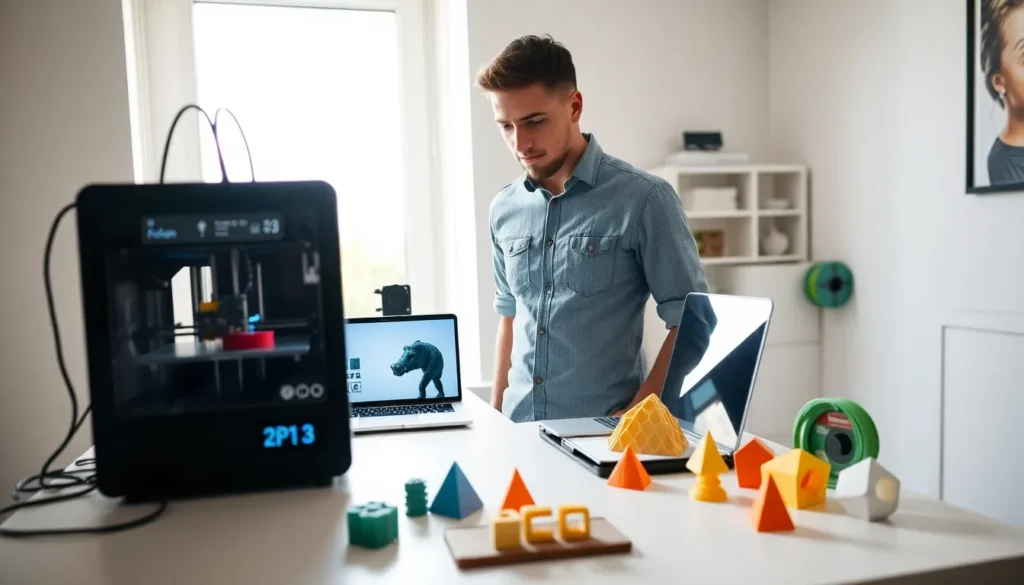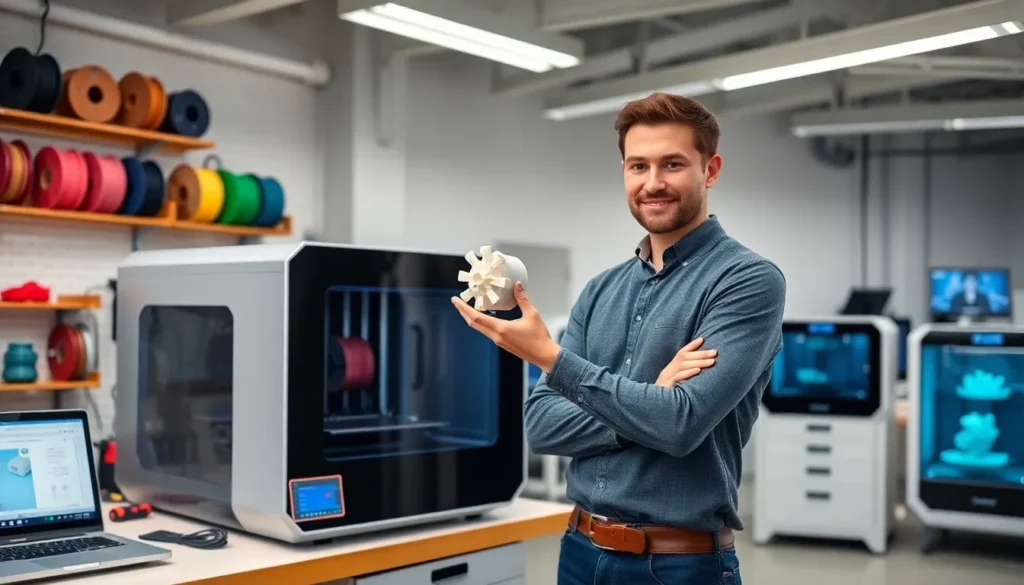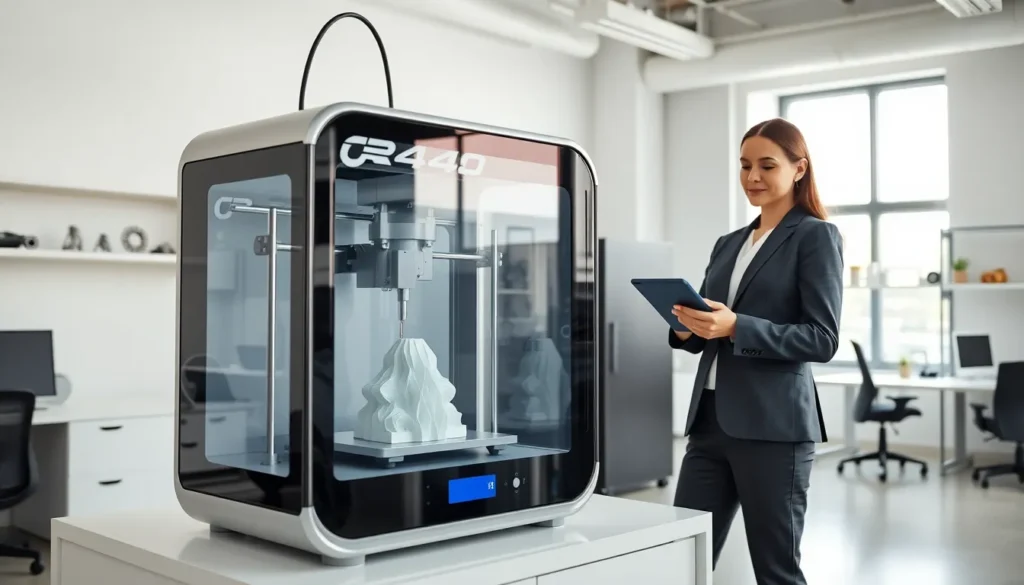

Top 3D printing has moved far beyond hobbyist workshops and into mainstream manufacturing, healthcare, and consumer markets. In 2025, the technology offers faster speeds, better materials, and more accessible price points than ever before. Whether someone wants to prototype a product idea at home or produce custom medical implants at scale, 3D printing delivers practical solutions.
This article covers the leading 3D printing methods available today, the best printers for different use cases, and the industries being transformed by additive manufacturing. Readers will also find clear guidance on selecting the right 3D printing solution for their specific needs.
Table of Contents
ToggleKey Takeaways
- Top 3D printing in 2025 spans FDM, SLA, and SLS methods, each suited to different budgets, materials, and precision needs.
- Beginners can start with quality printers like the Bambu Lab A1 Mini ($299) or Creality Ender-3 V3 SE ($199) to learn fundamentals affordably.
- Industries including healthcare, aerospace, and consumer goods use 3D printing for custom implants, lightweight aircraft parts, and personalized products.
- When choosing a 3D printing solution, consider total cost of ownership—including materials, maintenance, and time—not just the printer’s sticker price.
- Starting with an affordable, well-documented machine builds valuable skills that transfer to more advanced top 3D printing equipment later.
Understanding Modern 3D Printing Methods
Several top 3D printing technologies dominate the market in 2025. Each method serves different purposes, budgets, and material requirements.
Fused Deposition Modeling (FDM)
FDM remains the most popular 3D printing method for home users and small businesses. The printer heats thermoplastic filament and deposits it layer by layer to create objects. FDM printers cost between $200 and $5,000, making them accessible for beginners and professionals alike. Common materials include PLA, ABS, and PETG.
The main advantages of FDM are low cost, easy maintenance, and a wide selection of materials. But, prints show visible layer lines and require post-processing for smooth finishes.
Stereolithography (SLA) and Resin Printing
SLA uses ultraviolet light to cure liquid resin into solid objects. This top 3D printing method produces highly detailed parts with smooth surfaces. Dental labs, jewelry makers, and miniature enthusiasts prefer SLA for its precision.
Resin printers have become more affordable, with quality machines starting around $300. The trade-off involves messier workflows and higher material costs compared to FDM.
Selective Laser Sintering (SLS)
SLS fuses powdered materials using a laser beam. This industrial-grade 3D printing method creates strong, functional parts without support structures. Engineers use SLS for end-use components and complex geometries.
SLS machines historically cost $100,000 or more. Desktop SLS printers now start around $10,000, bringing the technology within reach of smaller companies.
Best 3D Printers for Home and Professional Use
Choosing the right printer depends on budget, intended use, and technical comfort level. Here are top 3D printing options across different categories.
Best for Beginners
The Bambu Lab A1 Mini offers excellent print quality and ease of use at around $299. It features automatic bed leveling, a color touchscreen, and fast print speeds. New users can produce quality prints within hours of unboxing.
The Creality Ender-3 V3 SE provides solid performance at $199. It requires more setup but teaches valuable skills about 3D printing mechanics.
Best for Professionals
The Prusa MK4 delivers consistent, reliable prints for $799. Czech-based Prusa Research has built a reputation for quality hardware and excellent customer support. Many small businesses run fleets of Prusa machines for production work.
For resin printing, the Formlabs Form 4 sets the industry standard. At $4,499, it offers dental-grade precision and industrial reliability. Medical device companies and engineering firms trust Formlabs for critical applications.
Best for High-Volume Production
The Bambu Lab X1 Carbon handles multiple materials and colors automatically. Its four-material system and enclosed chamber suit businesses producing finished products. Expect to pay around $1,449 for this top 3D printing workhorse.
Raise3D machines serve manufacturers needing large build volumes and 24/7 operation. Prices range from $3,000 to $10,000 depending on size and features.
Popular Applications Transforming Industries
Top 3D printing applications extend across healthcare, aerospace, automotive, and consumer goods. The technology solves problems that traditional manufacturing cannot address efficiently.
Healthcare and Medical Devices
Hospitals now print custom surgical guides, prosthetics, and anatomical models. Surgeons practice complex procedures on 3D printed replicas of patient anatomy. Dental labs produce crowns, aligners, and dentures in-house rather than outsourcing.
Bioprinting research continues advancing. Scientists have printed functional tissue samples and are working toward transplantable organs.
Aerospace and Automotive
Aircraft manufacturers use 3D printing to produce lightweight components. GE Aviation prints fuel nozzles that are 25% lighter and five times more durable than traditionally made parts. SpaceX prints rocket engine components using metal 3D printing.
Automotive companies prototype new designs quickly. They also produce custom jigs, fixtures, and low-volume replacement parts. BMW and Ford operate large 3D printing facilities.
Consumer Products and Art
Top 3D printing enables mass customization at consumer scale. Eyewear companies scan faces and print perfectly fitted frames. Footwear brands print midsoles matched to individual running gaits.
Artists and designers create sculptures, jewelry, and furniture impossible to make by hand. Musicians print custom instruments and accessories.
How to Choose the Right 3D Printing Solution
Selecting the right 3D printing setup requires honest assessment of needs, skills, and resources.
Define the Use Case
Start with specific questions. What objects will be printed? What materials are needed? How many prints per week? What tolerances are acceptable?
Someone printing figurines has different needs than someone producing functional prototypes. A jewelry designer needs fine detail. An engineer needs material strength.
Consider Total Cost of Ownership
Printer price tells only part of the story. Factor in materials, maintenance, software, and time spent troubleshooting. Cheap printers often require expensive upgrades or frequent repairs.
Top 3D printing machines from reputable manufacturers cost more upfront but save money long-term. They also reduce frustration and wasted materials.
Evaluate Space and Environment
Resin printers require ventilation and cleanup areas. Large FDM machines need stable surfaces and temperature-controlled rooms. Some printers operate quietly: others sound like small factories.
Start Small, Then Scale
Beginners should start with affordable, well-documented machines. Learning fundamentals on a $300 printer builds skills that transfer to expensive equipment. Many professionals started with budget printers and upgraded as their needs grew.
Join online communities for support. Reddit, Discord servers, and manufacturer forums provide quick answers to common problems.