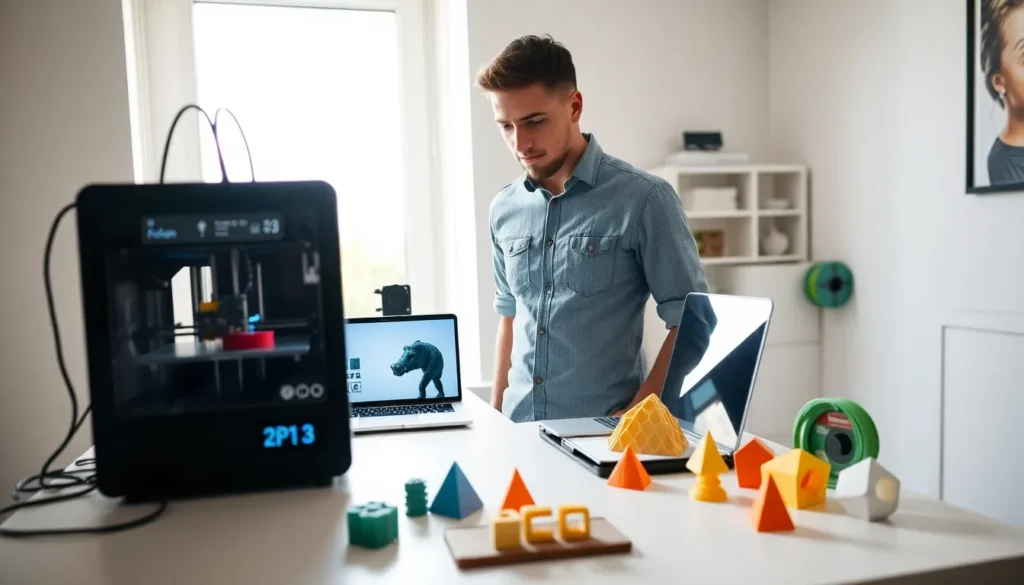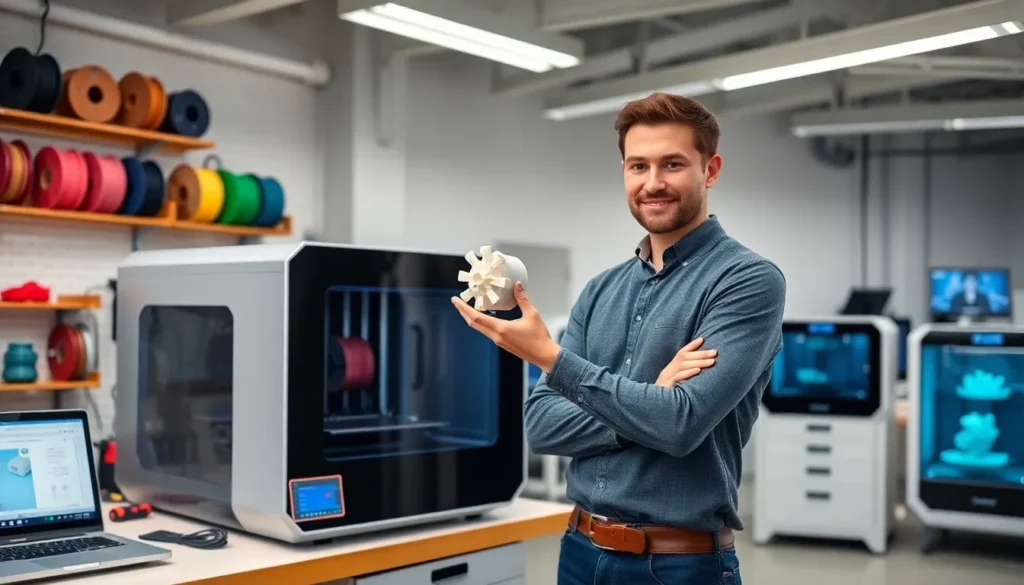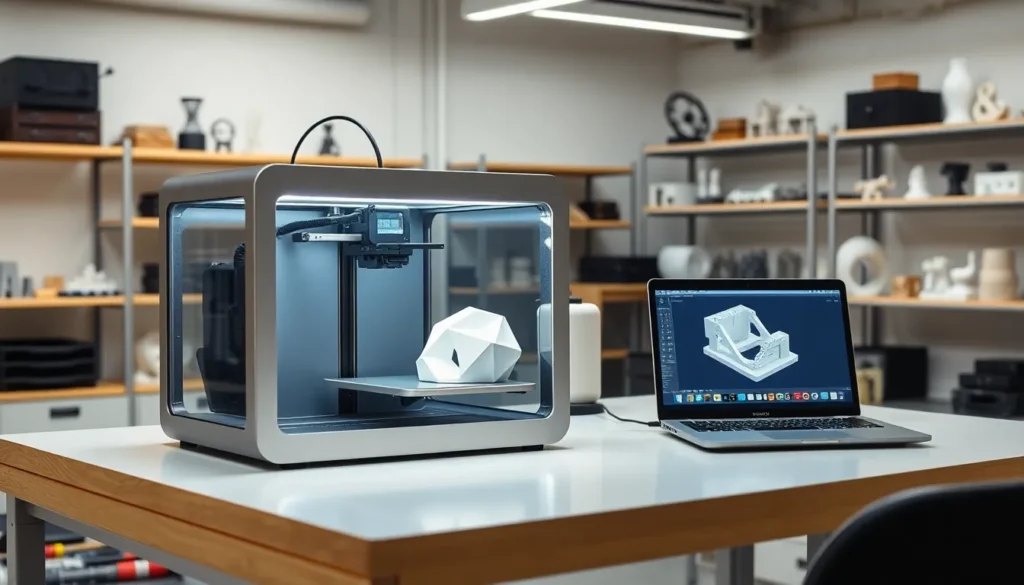

3D printing transforms digital designs into physical objects by building them layer by layer. This technology has changed how industries create products, from medical devices to aerospace components. Unlike traditional manufacturing methods that cut away material, 3D printing adds material precisely where needed. The process reduces waste and allows for shapes that would be impossible to make otherwise. Whether someone wants to prototype a new product or produce custom parts on demand, 3D printing offers a flexible solution. This guide explains how 3D printing works, the main technologies available, real-world applications, and the key advantages and drawbacks to consider.
Table of Contents
ToggleKey Takeaways
- 3D printing builds physical objects layer by layer from digital designs, making it ideal for prototypes, custom parts, and complex geometries.
- Common 3D printing technologies include FDM for affordability, SLA for precision, SLS for complex shapes, and DMLS for metal components.
- Industries like healthcare, aerospace, automotive, and fashion use 3D printing for patient-specific devices, lightweight parts, and mass customization.
- Key benefits of 3D printing include design freedom, reduced material waste, rapid prototyping, and on-demand production without large inventories.
- Limitations include slower speeds for high-volume production, visible layer lines requiring post-processing, and higher per-unit costs at scale compared to traditional manufacturing.
How 3D Printing Works
3D printing starts with a digital file. Designers create a 3D model using computer-aided design (CAD) software or scan an existing object with a 3D scanner. The software then slices this model into hundreds or thousands of thin horizontal layers.
A 3D printer reads these layers and deposits material one layer at a time. Each layer bonds to the previous one until the object takes shape. This additive process is why 3D printing is also called additive manufacturing.
The basic steps include:
- Design – Create or download a 3D model file (usually in STL or OBJ format)
- Slice – Use slicing software to convert the model into printer instructions (G-code)
- Print – The printer builds the object layer by layer
- Post-process – Remove supports, sand surfaces, or apply finishes as needed
Print times vary widely. A small keychain might take 30 minutes. A detailed architectural model could require 20 hours or more. Factors like layer height, infill density, and object size all affect duration.
3D printing gives creators direct control over production. A designer can modify a file in the morning and hold the updated physical prototype by afternoon. This speed makes 3D printing valuable for rapid iteration and testing.
Common Types of 3D Printing Technology
Several 3D printing technologies exist, each suited to different materials and applications.
Fused Deposition Modeling (FDM)
FDM is the most common type of 3D printing for home and office use. It heats a plastic filament and extrudes it through a nozzle. The material cools and hardens as each layer is deposited. FDM printers work with materials like PLA, ABS, PETG, and nylon. They’re affordable and easy to operate, making them popular for hobbyists and small businesses.
Stereolithography (SLA)
SLA uses a UV laser to cure liquid resin into solid plastic. This method produces highly detailed parts with smooth surface finishes. Jewelry makers, dentists, and product designers often choose SLA for precision work. The trade-off is that resin can be messy to handle and requires post-curing.
Selective Laser Sintering (SLS)
SLS uses a laser to fuse powdered material, typically nylon or other polymers. Parts made with SLS don’t need support structures because the surrounding powder holds the object during printing. This allows for complex geometries and interlocking parts. SLS is common in industrial settings and functional prototyping.
Direct Metal Laser Sintering (DMLS)
DMLS applies the sintering concept to metal powders like titanium, aluminum, and stainless steel. Aerospace and medical industries use DMLS to create strong, lightweight components. The cost is high, but the ability to produce metal parts without traditional machining makes it worthwhile for specific applications.
Each 3D printing technology has strengths. The right choice depends on material requirements, detail level, budget, and intended use.
Popular Applications of 3D Printing
3D printing has moved far beyond simple prototypes. Industries across the board now rely on this technology for production-ready parts and innovative solutions.
Healthcare and Medical Devices
Hospitals use 3D printing to create patient-specific surgical guides, prosthetics, and dental implants. Surgeons can practice complex procedures on 3D-printed models of a patient’s anatomy before entering the operating room. Researchers are even exploring bioprinting, using living cells to create tissue structures.
Aerospace and Automotive
Aircraft manufacturers print lightweight brackets, fuel nozzles, and cabin components. These parts often weigh less than traditionally manufactured alternatives while maintaining strength. Automotive companies use 3D printing for custom tooling, jigs, and even end-use parts in luxury and racing vehicles.
Consumer Products and Fashion
From custom eyewear frames to personalized phone cases, 3D printing enables mass customization. Fashion designers have created 3D-printed shoes, jewelry, and clothing pieces. The technology allows small brands to compete by offering unique products without large inventory investments.
Architecture and Construction
Architects print detailed scale models to present designs to clients. Some companies have taken 3D printing further by constructing entire houses. These building-scale printers use concrete mixtures to erect walls in days rather than weeks.
Education and Research
Schools and universities use 3D printing to teach design principles and manufacturing concepts. Students can turn ideas into tangible objects quickly. Research labs rely on 3D printing to build custom equipment and experimental apparatus.
Benefits and Limitations of 3D Printing
3D printing offers clear advantages, but it’s not the right solution for every situation. Understanding both sides helps determine when to use this technology.
Key Benefits
Design Freedom – 3D printing can produce shapes that traditional manufacturing cannot. Internal channels, lattice structures, and organic forms are all possible.
Rapid Prototyping – Designers iterate faster when they can print new versions in hours instead of waiting weeks for tooling.
Reduced Waste – Additive manufacturing uses only the material needed for the part. Subtractive methods like CNC machining cut away excess material that often becomes scrap.
On-Demand Production – Companies can print parts as needed rather than maintaining large inventories. This is especially valuable for spare parts and low-volume items.
Customization – Each printed object can be unique without additional cost. Medical devices, consumer goods, and industrial components can all be customized to individual specifications.
Notable Limitations
Speed for High Volumes – 3D printing is slower than injection molding for producing thousands of identical parts. Traditional mass production still wins on per-unit time for large runs.
Material Constraints – Not all materials work well with 3D printing. Some high-performance plastics and metals remain difficult or expensive to print.
Surface Finish – Many 3D-printed parts show visible layer lines. Post-processing steps like sanding, polishing, or coating add time and cost.
Size Limits – Most 3D printers have limited build volumes. Printing large objects requires specialized equipment or splitting the design into multiple pieces.
Cost at Scale – While 3D printing is cost-effective for small batches and prototypes, per-unit costs often remain higher than traditional manufacturing at large volumes.