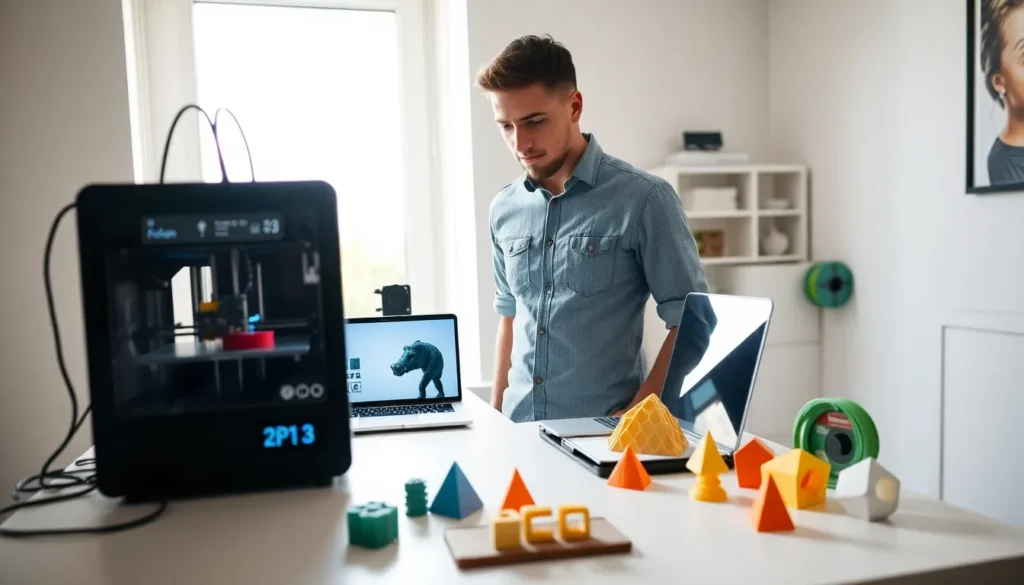
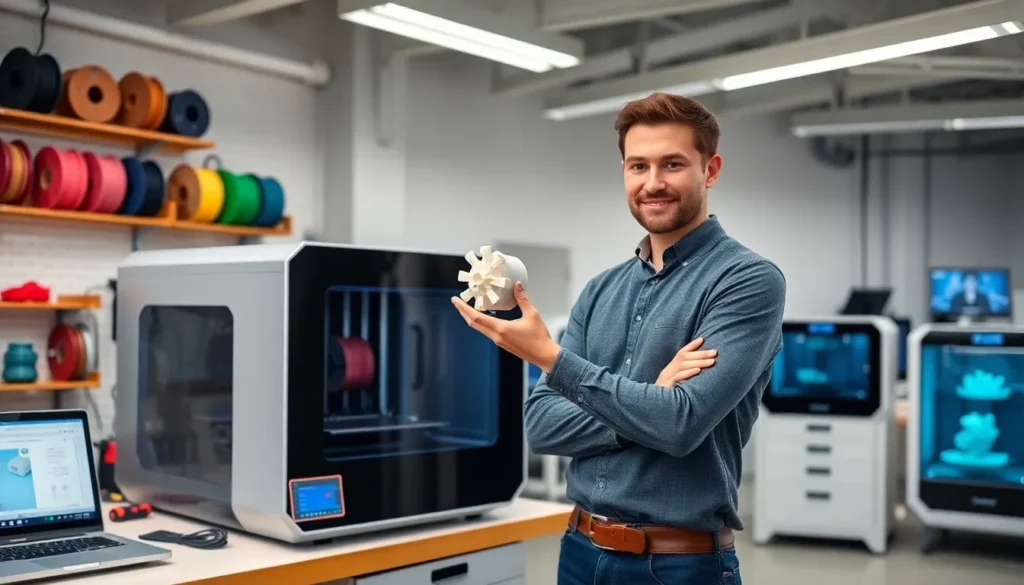
3D printing examples now span nearly every major industry. From custom prosthetics to rocket engines, this technology has moved far beyond hobbyist projects. Companies use additive manufacturing to cut costs, speed up production, and create objects that traditional methods cannot produce.
The global 3D printing market reached $18.3 billion in 2024. Experts predict it will exceed $83 billion by 2030. These numbers reflect a simple truth: businesses and institutions see real value in this technology. This article covers practical 3D printing examples across healthcare, aerospace, consumer goods, construction, and education.
Table of Contents
ToggleKey Takeaways
- 3D printing examples span healthcare, aerospace, construction, consumer goods, and education—proving the technology’s versatility across industries.
- Medical applications include custom prosthetics costing under $50 and patient-specific implants that reduce surgery time by up to 25%.
- Aerospace leaders like SpaceX and GE Aviation use 3D printing to create lighter, stronger components with fewer parts and faster production.
- Consumer brands such as Adidas and New Balance now sell products with 3D printed components, offering personalized performance features.
- 3D printed homes can be constructed in approximately 24 hours, addressing housing shortages with lower labor costs and faster build times.
- The global 3D printing market is projected to grow from $18.3 billion in 2024 to over $83 billion by 2030.
Healthcare and Medical Applications
Healthcare provides some of the most impressive 3D printing examples today. Medical professionals use this technology to save lives, reduce surgery times, and create patient-specific solutions.
Custom Prosthetics and Implants
Traditional prosthetics cost thousands of dollars and require weeks to manufacture. 3D printed prosthetics cost a fraction of that price. Organizations like e-NABLE produce functional prosthetic hands for children at costs under $50. These devices can be replaced as kids grow, something financially impossible with conventional prosthetics.
Titanium hip replacements and spinal implants represent another category of 3D printing examples in medicine. Surgeons now use patient-specific implants printed from CT scan data. These custom pieces fit better and reduce recovery time.
Surgical Planning Models
Hospitals print exact replicas of patient organs before complex surgeries. A surgeon at Boston Children’s Hospital can practice a heart procedure on a 3D printed model before touching the actual patient. This preparation cuts operating room time by up to 25% in some cases.
Bioprinting Research
Researchers are developing 3D printing examples that use living cells as “ink.” Scientists have printed skin grafts, cartilage, and simple organ structures. While full organ printing remains years away, these early 3D printing examples show promise for addressing transplant shortages.
Aerospace and Automotive Manufacturing
Aerospace and automotive companies were early adopters of additive manufacturing. They continue producing groundbreaking 3D printing examples.
Rocket Components
SpaceX prints SuperDraco engine chambers using direct metal laser sintering. Relativity Space goes further, they aim to 3D print 85% of their rockets. These 3D printing examples demonstrate how additive manufacturing reduces part counts and assembly time.
NASA uses 3D printed rocket injectors that withstand temperatures exceeding 6,000°F. Traditional manufacturing would require welding dozens of separate pieces. The printed version is a single component.
Aircraft Parts
GE Aviation prints fuel nozzles for LEAP jet engines. Each nozzle previously required welding 20 separate parts. The 3D printed version weighs 25% less and lasts five times longer. Airlines use over 100,000 of these nozzles today.
Boeing and Airbus incorporate hundreds of 3D printed parts in commercial aircraft. These 3D printing examples include cabin brackets, air ducts, and structural components.
Automotive Innovation
Bugatti 3D prints titanium brake calipers that weigh 40% less than aluminum versions. Ford produces transmission housings and engine covers through additive manufacturing. BMW prints tens of thousands of parts annually for its vehicles.
Electric vehicle startups use 3D printing examples to accelerate development. They can test new designs in days rather than months.
Consumer Products and Home Goods
Consumer 3D printing examples have expanded rapidly. Products people use daily now come off additive manufacturing lines.
Footwear
Adidas sells the 4DFWD running shoe with a 3D printed midsole. The lattice structure provides specific cushioning properties impossible with traditional foam. New Balance and Under Armour offer similar products. These 3D printing examples give athletes customized performance features.
Eyewear
Companies like Monoqool produce 3D printed glasses frames. Each pair weighs under 8 grams. Customers can order frames matched exactly to their facial measurements. This represents one of the most personalized 3D printing examples in retail.
Jewelry and Accessories
Jewelers use 3D printing for both prototyping and final production. Complex geometric designs that goldsmiths cannot hand-craft become possible. Many Etsy sellers offer 3D printed jewelry as unique fashion pieces.
Kitchen and Home Items
Ceramic 3D printing produces decorative vases, planters, and lighting fixtures. IKEA has tested 3D printed furniture components. These 3D printing examples suggest a future where consumers order custom home goods printed on demand.
Architecture and Construction
Construction represents one of the fastest-growing sectors for 3D printing examples. Buildings, bridges, and infrastructure projects now use additive manufacturing.
Printed Houses
ICON, a Texas-based company, prints homes using concrete extrusion. Their Vulcan printer creates walls layer by layer. A basic structure takes approximately 24 hours to print. These 3D printing examples address housing shortages by cutting labor costs and construction time.
In 2024, the first permitted 3D printed homes went on sale in the United States. Prices start below $300,000 for a three-bedroom house. Similar projects exist in Mexico, the Netherlands, and Dubai.
Bridges and Infrastructure
Amsterdam installed a 3D printed steel pedestrian bridge in 2021. The structure spans 40 feet and uses sensors to monitor structural health. China has printed multiple concrete pedestrian bridges.
Architectural Models
Architects use desktop 3D printers to create presentation models. What once took weeks of handcrafting now happens overnight. These 3D printing examples help clients visualize projects before construction begins.
Education and Prototyping
Schools and product developers rely heavily on 3D printing. These applications may be less flashy, but they shape future innovation.
Classroom Learning
Students learn engineering, design, and manufacturing through hands-on 3D printing examples. A middle schooler can design a phone case in CAD software and hold the finished product hours later. This immediate feedback accelerates learning.
Medical schools print anatomical models for student study. Paleontology departments print dinosaur fossils for classroom handling. These 3D printing examples make abstract concepts physical and tangible.
Rapid Prototyping
Product designers test ideas through 3D printed prototypes. A new phone case design goes from sketch to physical model in a single day. Companies iterate through dozens of versions before committing to expensive tooling.
Startups with limited budgets use 3D printing examples to compete with larger firms. They validate products quickly without investing in injection molds or assembly lines.
Research Applications
Universities print custom lab equipment, test fixtures, and experimental apparatus. Researchers modify designs freely without waiting for machine shops. These 3D printing examples accelerate scientific discovery across disciplines.